 Stamp Collecting Blog - the premier resource for exclusive stamp information and news
Philatelic (Stamp collecting) software and online services - reviews etc
This is index page for articles about Philatelic (Stamp collecting) software and online services - reviews etc . Below you find excerpts on available stories. To read the full stories, please subscribe or sign in.
8 tips for scanning awesome stamp images
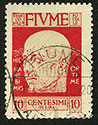 One of the most important tools of every stamp blogger (and author) are stamp images. For example SCB features closer to 5,000 stamp images (and increasing) from my collection, and I have produced thousands of images for items I have sold over the years. Though modern technology has made digital imagining easy, unfortunately a lot of collectors still struggle to scan images that look both realistic and attractive. Like most things involving technology it all comes down to understanding how things work, and knowing some tips and tricks to spice up things. Basically these 8 tips can be put into use on just about any philatelic software that relies or uses scanned stamp images.
...(2171 words, 6 images, 5 comments)
The difficulty of fully automated stamp perforation measurements (and why gauging manually is still leading the pack)
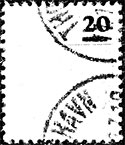 Below is a stamp some of you might seen on March Stamp gems page - British occupation of Faroe Islands. Say you had hundreds or thousand of stamps (or stamp scans) for which you wanted to quickly check perforations on all of them, would you gauge the stamps manually, or would you give some automatic perforation software a try? As a geek I am always interested of the the lazy approach, and as such I thought it was time to revisit the topic whether or not available philatelic software packages could handle the challenge.
...(1383 words, 7 images, 2 comments)
Beauty and the Beast: Inventorying not just quantity, but also quality of stamps
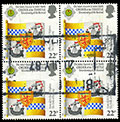 What are the odds of discovering a nicely cancelled British stamp? Or Sri Lankan stamp with non-obtrusive postmark? Or Canadian stamps with something other than machine slogan? I am sure most worldwide stamp collectors do agree with me that all above examples are possible, but somewhat scarce creatures. On the other end of the line are stamps from countries such as Switzerland, Germany or Denmark, which are almost always nicely cancelled.
...(1074 words, 4 images, 8 comments)
Crash Boom Bang! (Or how stamp collecting has moved to 21st century digital world)
 As I was about to start typing this week’s blog post, I heard Crash Boom Bang (or more precisely it was a series of sounds that reminded of R2-D2 bleeping in distress) from my computer. My trusted workhorse of 7 years, a custom built Dell Latitude E6510 laptop, had just experienced a heat stroke due to which all the eight cores of it were forced to emergency shutdown. As I counted the minutes for the machine to cool down a bit before an attempt to reboot, a cold sweat poured all over my front head. Replacing the main system is every geeks worst nightmare. Though I do have multiple backups of my precious data and a number of systems that I can use for random online access and light work, there is only one system that has got ALL the pieces in place. It could take several weeks for a proper replacement machine to arrive, and even more time tinkering and tweaking the system to my liking. So I felt very worried.
...(1505 words, 0 images, 5 comments)
Stamp data visualization - or how to review postage stamp related data in fun and visual way
 For anyone collecting worldwide stamps in depth, one of the biggest challenges is likely understanding the big picture. Sure - I can look at a pile of stockbooks or catalogs, and say there it is. But it really doesn't describe anything else than the sheer amount. Thus I'm constantly trying new ways to visualize various stamp data to make deeper understanding easier. Lately one of my work projects required use of D3 data visualization library (a free tool for software developers), and after some playing with it, I realized that I definitely want to try it on some of the statistics I've gathered to build My Collection. And I think the results of my tests are worth sharing, at least I haven't seen anything as such on stamps ever before. This is a classic example how software intended for something very different can become a very powerful philatelic tool/software when given the right task.
...(547 words, 3 images, 4 comments)
Automated stamp recognition / identification software - why it is such a BAD idea to allow a machine do all the fun (work) for you
 I was recently reading a research paper about automated stamp image recognition, when it hit me that this is one of those situations where smart IT-guys (like yours truly, LOL) are often building philatelic tools that might not necessarily serve the hobby. If software automatically identifies a stamp in second or two (and even faster), what is there for the collector to do? Take a picture of a stamp, let the program identify it, and then place the stamp into an album? Ask me, but that's not how you become or enjoy being a stamp collector.
...(504 words, 4 images, 9 comments)
Review of Stamp Mate 2014
 Around August of last year I was approached by fellow software developer Tomaž Langerholc asking my opinion of about a stamp inventory tool he was working. Little did I know that this simple request would lead into nearly six month involvement in testing and making of Stamp Mate. Anyway, as Stamp Mate has been publicly available for few months now, I thought I'd share a quick review of it as it is IMHO one of the 'coolest' stamp software product for 'serious' stamp collectors out there.
...(892 words, 3 images, 6 comments)
About pricing of online stamp catalogs
 Scott is releasing their range of digital stamp catalogues later this year, and I've been tracking with great interest any possible clues about the price it will become available. VSC is now having a poll where the editor of Scott catalogs, Chad Snee, is asking whether collectors would prefer to pay $99.99 - $124.99/year or $124.99 - $149.99/year for access to six-volume digital Scott Standard catalog. Not surprisingly, a lot of VSC members have chosen not to vote, and stated directly that neither of the given options attracts them. Is Scott asking too much?
...(442 words, 0 images, 49 comments)
Mounting stamp collections digitally
 Not so long ago I started experimenting with something I'd describe as mounting collections digitally. In practice, it's very similar process to creating DIY stamp album pages, but there's one major exception: the pages are never printed on paper. They remain in digital format all the way, meaning that I even mount my stamps (or more precisely images of them) digitally too... Below is a small teaser how my collection of "Russian Empire era Finland" looks when done like this.
...(329 words, 6 images, 53 comments)
eBooks are the future of stamp catalogs and other philatelic literature
Though I'm much in love with papery (printed) stamp catalogues, I have no doubts that sooner or later eBooks will triumph over printed matter. Right now one of my largest annoyances is the fact that though eBooks seem to be this seasons hottest gift ideas, there is nothing but few oddball philatelic publications available. Nothing from Amos (publisher of Scott), nothing from Schwanberger (publisher of Michel), and nothing from SG (publisher of Stanley Gibbons). Why?
...(242 words, 1 images, 39 comments)
Using high resolution scans as an aid in philately
 Though I have a somewhat good eye vision, I use high resolution scans as my aid more or less constantly. Below is a small example of 1988 Japanese stamp that I thought might contain a scratch flaw.
...(187 words, 2 images, 15 comments)
Long postage stamp series - how to keep track of what You have / need?
 In my opinion one of the hardest (but also the most interesting) challenges of stamp collecting are long definitive sets that span into all possible directions. The most notorious ones, like UK Machin stamps and Norwegian posthorns feature hundreds of major types scattered all across the stamp catalog timeline, and the varieties easily double or triple the number of items to collect. These are a huge challenge to keep track for anyone.
...(841 words, 4 images, 13 comments)
Top 5 free online stamp catalogues reviewed
 One of the frequently asked questions by newbie stamp collectors concerns free online stamp catalogues: are there any, and how to find them. So, I thought it would be fun and useful to write a short review list of what I consider the top5 alternatives. I hope You have fun exploring the below websites.
...(423 words, 0 images, 89 comments)
Keeping track of stamp collection
 In this world nothing is certain but death and taxes. The idea of stamp inventory program (and other stamp collecting software) is to be of assistance when either one hits the collector. On simplified level, a stamp inventory solution keeps track of what's inside the collectors collection, and what it might be worth. In my previous post about stamp collecting software I pretty much axed dedicated software solutions and hailed Microsoft Excel. With this blog entry I'll show you in more detail how I keep track of my collection.
...(1129 words, 2 images, 299 comments)
Why most stamp collecting / inventory software solutions suck?
 This week I'll be focusing on topic of utilizing technology, especially philatelic software, as part of working with my worldwide stamp collection. Like most geeks, I'm somewhat lazy by nature. I dislike the idea of manually typing details of each stamp to inventory program. I want stamp inventory program that provides a preferably visual list of (all) issued stamps with basic set of details - leaving me only with the task of selecting what I have or don't have, and maybe providing some additional details. It would also have to provide catalog numbers of my favorite stamp catalogue. Sounds like a GREAT product, and there are lots of available alternatives. But...
...(1079 words, 2 images, 525 comments)
Q&A: stamp software
Ask and discuss about stamp related software and online services. ...(58 comments).
Article categories
- Generally speaking about stamps, philately and collecting
- Learn the basics of stamp collecting - advice on how to get started
- How to preserve and build a stamp collection
- Philatelic knowledge base
- Stamp forgeries, philatelic fakes and other counterfeits
- Stamp collecting software (inventory programs and databases, online stamp catalogs etc)
- Straight talk about stamp values (both catalog and real world)
- Back of book stamps and other unusual stamp-like items
- EFO-stamps: errors, freaks and oddities on postage stamps
- Q & A - Ask anything about stamps and collecting
- Article index by country and topic
- SCB's Digital Perforation Gauge